In everyday speech, almost every bottled-water unit in India gets called a "mineral water plant". In law it is not that simple. FSSAI has two separate standards: one for packaged drinking water (PDW) and one for natural mineral water. Which one your product falls under decides the source you need, the treatment you may use and what you can print on the label.
Two products, two standards
Both products are covered by the Food Safety and Standards (Food Products Standards and Food Additives) Regulations, 2011:
- Natural mineral water has its standard in sub-regulation 2.10.7. The matching Indian Standard is IS 13428:2005.
- Packaged drinking water (other than mineral water) has its standard in sub-regulation 2.10.8. The matching Indian Standard is IS 14543:2016.
What makes water "natural mineral water"
FSSAI describes natural mineral water as water from underground sources that is packaged close to the source. It is identified by its mineral salt content, the relative proportions of those salts and the presence of trace elements or other constituents. It must be collected in conditions that keep its original microbiological purity and the chemical make-up of its essential components, and processing is limited to what the standard permits.
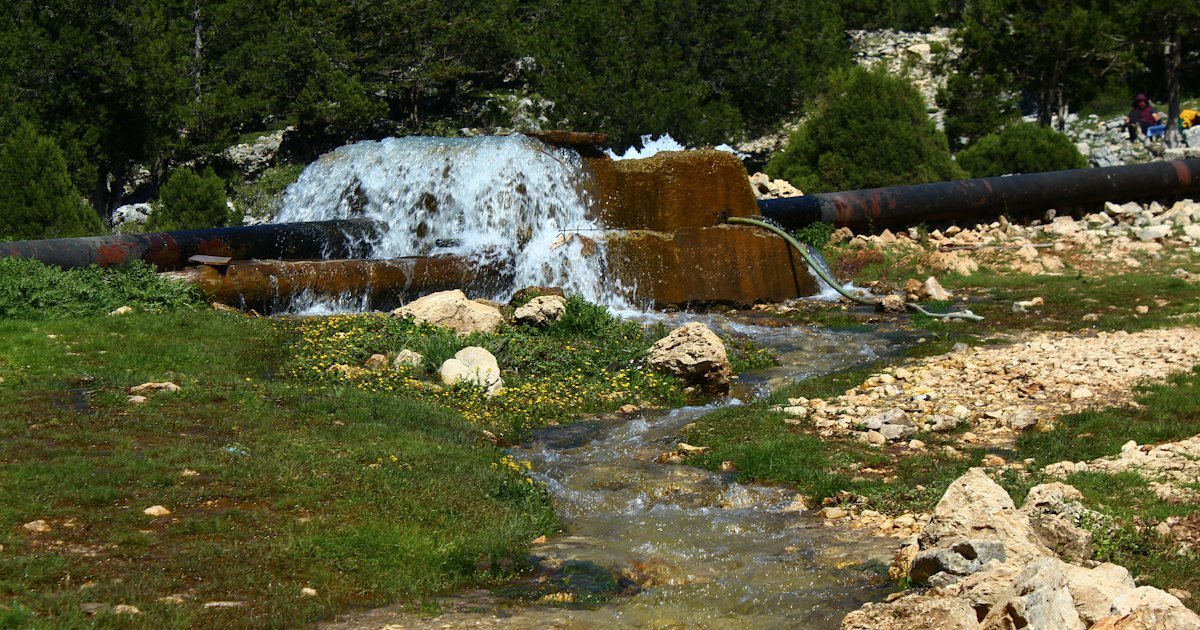
An amendment notified on 20 July 2018 added "natural spring water" as a sub-category: natural mineral water from an underground formation where the water flows naturally to the surface. The same standard also defines carbonated, non-carbonated and decarbonated types.
What makes water "packaged drinking water"
PDW can come from any source. FSSAI says it must be treated and disinfected before it is fit to drink, for example by filtration, UV, ozone or reverse osmosis (RO). IS 14543:2016 defines it as water derived from surface or underground water (sea water must be desalinated first) and lists permitted treatments including decantation, filtration, aeration, demineralisation, remineralisation, RO and disinfection. If minerals are added back, the ingredients must be food grade.
In practice, a typical borewell-plus-RO plant makes PDW, not natural mineral water.
Side-by-side comparison
| Point | Packaged drinking water | Natural mineral water |
|---|---|---|
| FSSAI standard | Sub-regulation 2.10.8 | Sub-regulation 2.10.7 |
| Indian Standard (BIS) | IS 14543:2016 | IS 13428:2005 |
| Source | Any source: surface or underground; sea water after desalination | Underground source; packaged close to the source |
| Treatment | Treatment and disinfection required: filtration, RO, UV, ozone, demineralisation and remineralisation allowed | Limited to what the standard permits; original purity and composition must be kept |
| BIS mark nationally | Voluntary since 18 Oct 2024 | Voluntary since 18 Oct 2024 |
| BIS in Uttar Pradesh | Compulsory under UP FSDA order of 14 Oct 2026 | Compulsory under UP FSDA order of 14 Oct 2026 |
| FSSAI risk category | High-risk (order of 29 Nov 2024) | High-risk (order of 29 Nov 2024) |
| FSSAI Scheme of Testing | Compulsory from 1 Jan 2026 | Compulsory from 1 Jan 2026 |
| BIS licences in force (Sept 2022, as reported by BIS) | Over 6,200 | Over 30 |
The last row shows how rare natural mineral water units are. BIS reported these counts in a blog dated 8 November 2022, when BIS certification was still compulsory for both products.
What is the same for both
Most of the new compliance load applies equally. Both products are in FSSAI's high-risk food category, with pre-licence inspection, annual risk-based inspection and, for central licensees, an annual third-party audit (see our note on BIS no longer being mandatory and the high-risk rules). Both are under FSSAI's Scheme of Testing from 1 January 2026, with monthly microbiological testing, source-water testing at FSSAI-notified NABL labs and records kept for five years. Both need the right FSSAI licence category for your turnover, and both depend on groundwater approvals, since new packaged water units are not allowed in CGWA over-exploited blocks (see CGWA NOC).
What this means for water plant owners
- Match the product name to the standard. If your process uses RO or remineralisation on borewell water, your product is packaged drinking water. Apply, test and label as PDW.
- Natural mineral water is a source-led project. It starts with an underground source whose mineral profile qualifies, collected and packaged near the source with minimal processing. The source study comes before the machinery order.
- Check the licence and test reports name the right product. The product category on your FSSAI licence, your lab reports and your label should all say the same thing.
- Units in Uttar Pradesh need BIS under the state order whichever product they make: new units before licence, existing units by 31 March 2027.
- Pollution board and other approvals such as CTE and CTO apply to both types of plant.
How ClearPath Compliance India can help
We help plant owners confirm which standard their product falls under, choose the right FSSAI licence category and line up BIS (where needed), CGWA, pollution board, factory and fire approvals. See our packaged drinking water plant licence service, or call us before you finalise your source and process design.
Sources
- FSSAI FAQ: natural mineral water (sub-regulation 2.10.7)
- FSSAI FAQ: packaged drinking water (sub-regulation 2.10.8)
- IS 14543:2016, Packaged Drinking Water (other than packaged natural mineral water)
- BIS blog, 8 Nov 2022: certification of IS 14543 and IS 13428 (licence counts as of Sept 2022)
- S.S. Rana & Co., 17 Sep 2018: FSSAI amendment of 20 July 2018 (natural spring water)
- FSSAI order, 17 Dec 2025: Scheme of Testing for PDW and mineral water
General information only, not legal advice. Rules and figures as reported on the dates stated; check the current FSSAI regulations, BIS standards and state orders before acting. No brand is named or assessed in this article; any brand names are trademarks of their owners. Not sponsored or endorsed by any brand or organisation.