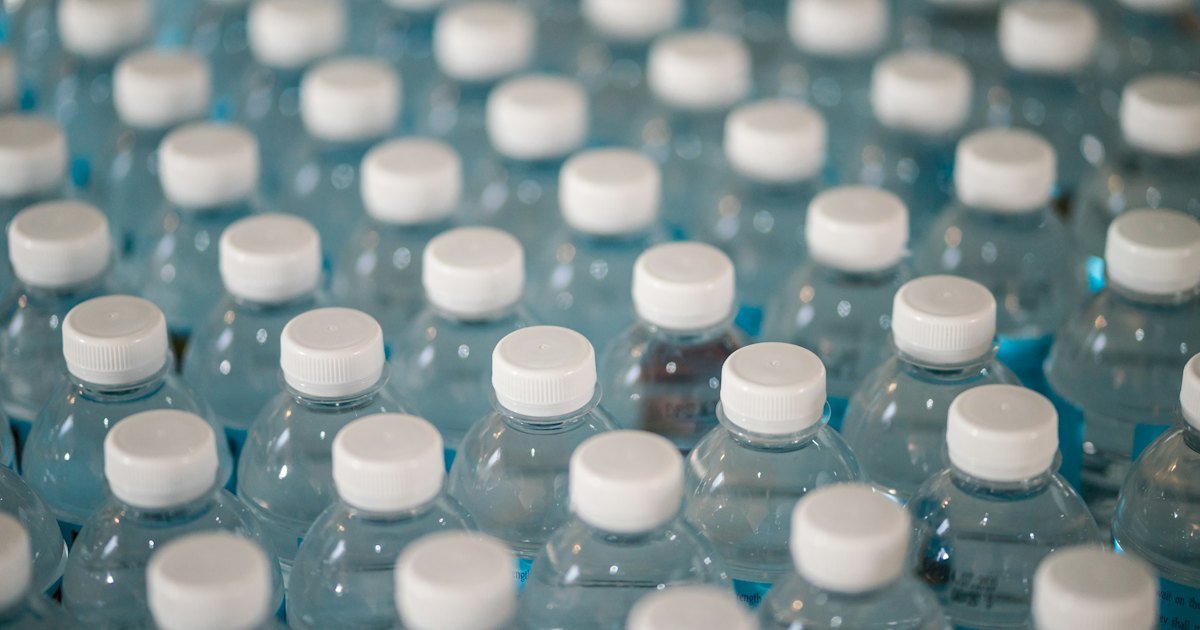
Every bottle and jar of packaged drinking water that leaves your plant puts plastic into the market, and under India's Plastic Waste Management Rules, you are responsible for what happens to it after use. That responsibility is called Extended Producer Responsibility (EPR).
For packaged drinking water (PDW) units, EPR is no longer a paperwork formality. The Plastic Waste Management (Amendment) Rules, 2026, notified on 31 March 2026 (G.S.R. 237(E)), added mandatory recycled content and, for the first time, reuse targets for water jars. This post explains why EPR applies to you and exactly what you must do.
What is EPR?
EPR means the company that puts plastic packaging into the market must also take responsibility for collecting and recycling it. The principle is simple: the polluter pays.
In practice, you register on the CPCB EPR portal, declare how much plastic packaging you placed in the market, and then show that an equal share has been collected and recycled. You do this by buying EPR certificates from CPCB-registered Plastic Waste Processors (PWPs), who generate them in proportion to the plastic they actually process.
EPR is governed by the Plastic Waste Management Rules, 2016, notified under the Environment (Protection) Act, 1986, and the EPR Guidelines for Plastic Packaging (2022), as amended.
Why EPR is required for packaged drinking water
Packaged drinking water is one of the largest users of plastic packaging in India. Almost everything a PDW plant ships is plastic:
- PET bottles (200 ml to 2 litre) and 20-litre jars: rigid plastic, Category I
- Shrink wrap, labels and pouches: flexible plastic, Category II
- Caps and closures: rigid plastic, counted with the bottle
So EPR applies for four practical reasons:
- It is the law. Any Producer, Importer or Brand Owner (PIBO) placing plastic packaging on the Indian market must register, whatever its turnover or size.
- No registration, no business. PIBOs cannot legally operate without EPR registration from CPCB, and some State PCBs have started asking units for EPR proof alongside consents.
- Your customers demand it. Large brand owners and retailers ask co-packers and suppliers for EPR registration before they release orders.
- The environment needs it. Discarded bottles clog drains, reach rivers and break into microplastics. EPR funds the collection and recycling system that keeps them out.
Who must register in a PDW business
| Role | Who it is in PDW | EPR position |
|---|---|---|
| Brand Owner | The company whose brand is on the bottle, including owners who get water packed by a co-packer | Main EPR obligation for all packaging sold under its brand; reuse targets for jars sit with the brand owner |
| Producer | A unit that makes plastic packaging, such as a plant blowing PET bottles from preforms, and units doing contract manufacturing for brand owners | Registers as Producer; recycled-content targets apply to producers |
| Importer | Anyone importing preforms, closures, bottles or packed water | Registers as Importer |
A note for co-packers: if you pack water for another brand, the brand owner carries the main EPR target. But if you blow bottles in-house or the brand owner's contract names you, you may still need your own Producer registration. Check your agreement and the CPCB definitions before assuming you are exempt.
Your EPR obligations as a PDW unit
A registered PDW unit has six ongoing obligations. Missing any one of them can lead to environmental compensation.
1. Register and renew on time
Apply on the CPCB EPR portal with your company KYC, authorised person details, Consent to Operate and category-wise plastic data. A first registration is valid for one year and a renewal for three years. File the renewal four months before expiry.
2. Meet your recycling (EPR) target
Your yearly target is worked out from the plastic you put on the market in earlier years, category by category. For rigid packaging such as PET bottles and jars, you must show that a set share has been recycled, by buying EPR certificates from registered processors. Declare honest quantities: under-declaring to cut the target is a common reason for penalties during audits.
3. Use recycled plastic in your bottles and jars
The 2026 amendment makes recycled content in Category I rigid packaging mandatory:
| Financial year | Minimum recycled content (Category I) |
|---|---|
| 2025-26 | 30% |
| 2026-27 | 40% |
| 2027-28 | 50% |
| 2028-29 onwards | 60% |
Because water is food, any recycled PET you use must also meet FSSAI food-contact norms. For food-contact packaging, a shortfall from 2025-26 can be carried forward for up to three years, clearing at least one-third of it each year. (More detail: 40% recycled PET from 2026-27.)
4. Meet the new reuse targets for jars and large containers
This is the change that matters most for PDW. For the first time, rigid packaging has reuse targets:
- Large water containers (4.9 litres and above, such as 20-litre jars): 70% reuse in 2025-26, rising gradually to 85%
- Small containers (0.9 to 4.9 litres): 10% reuse, rising over time
In practice, you need a working jar-return and refilling system, with records of jars issued, returned and refilled. (More detail: 70% reuse target for 20-litre jars.)
5. Label your packaging
Print your EPR registration number and other details required under the rules on every pack. Labels and shrink wrap are themselves plastic packaging, so count them in your declarations.
6. File annual returns
File your annual return on the portal by 30 June each year. It covers the plastic you placed on the market, certificates bought, recycled content used and, now, reuse data for rigid packaging.
What happens if you don't comply
Non-compliance costs more than compliance. The main consequences are:
- Environmental compensation: CPCB levies it on PIBOs that miss their EPR targets, and publishes an annual list of defaulters.
- Suspension or cancellation of registration: if documents or data are found to be false, the registration can be cancelled at any time, and you cannot operate without it.
- Action under the Environment (Protection) Act, 1986: the parent law allows prosecution and penalties for violations.
- Lost business: brand owners and large buyers drop suppliers who cannot show valid EPR registration.
The 2026 amendment gives some breathing room: shortfalls in 2025-26 targets are not penalised immediately and can be made up over the next three years. That is a window to catch up, not a reason to wait.
EPR checklist for PDW plant owners
- Decide your role: Brand Owner, Producer or both
- Collect KYC: PAN, CIN, GST for every state, authorised person's PAN and Aadhaar, board resolution
- Keep your CTE/CTO from the State PCB valid
- Compile category-wise plastic data for the last two financial years: bottles, jars, caps, labels, shrink wrap
- Register on the CPCB EPR portal and note your renewal date
- Tie up with registered Plastic Waste Processors for EPR certificates
- Plan your recycled PET supply with FSSAI-compliant suppliers
- Set up a jar-return and refill record system for the reuse target
- Print your EPR registration number on packaging
- File the annual return by 30 June
How ClearPath Compliance India can help
ClearPath Compliance India works with packaged drinking water, food and beverage plants on every licence they need: FSSAI, BIS, CGWA NOC, PCB CTE/CTO, factory licence, fire NOC and now EPR. We handle your EPR registration, target calculation, certificate procurement and annual returns, so your team can focus on production. See also our water plant approval checklist.
To get your plant EPR-ready, contact us.
General information only, not legal advice. Rules and targets are as reported on the dates stated and change often; always confirm current requirements on the CPCB EPR portal and the latest MoEFCC notifications. Brand names, where mentioned, are trademarks of their owners and are used for identification only. This article is not sponsored or endorsed by any brand.
Sources: Plastic Waste Management Rules 2026: Complete Compliance Guide (Agile Regulatory); Plastic Waste Management Rules 2026 (Drishti IAS); PWM (Amendment) Rules, 2026 (Corporate Professionals); An Overview of EPR for Plastic Waste Management (S.S. Rana); EPR Registration for Plastic Packaging (Aleph India).