
FSSAI has changed its food labelling rules, and the new version applies from 1 July 2027. For a packaged drinking water (PDW) plant that sounds far away, but label rolls, shrink sleeves and carton prints are usually ordered months in advance. If you print a large stock of old-format labels now, you may be left with packaging you cannot use. Here is what changed, what it means for bottles, jars and bulk packs, and how to plan the switch.
The policy change: Labelling and Display First Amendment Regulations, 2026
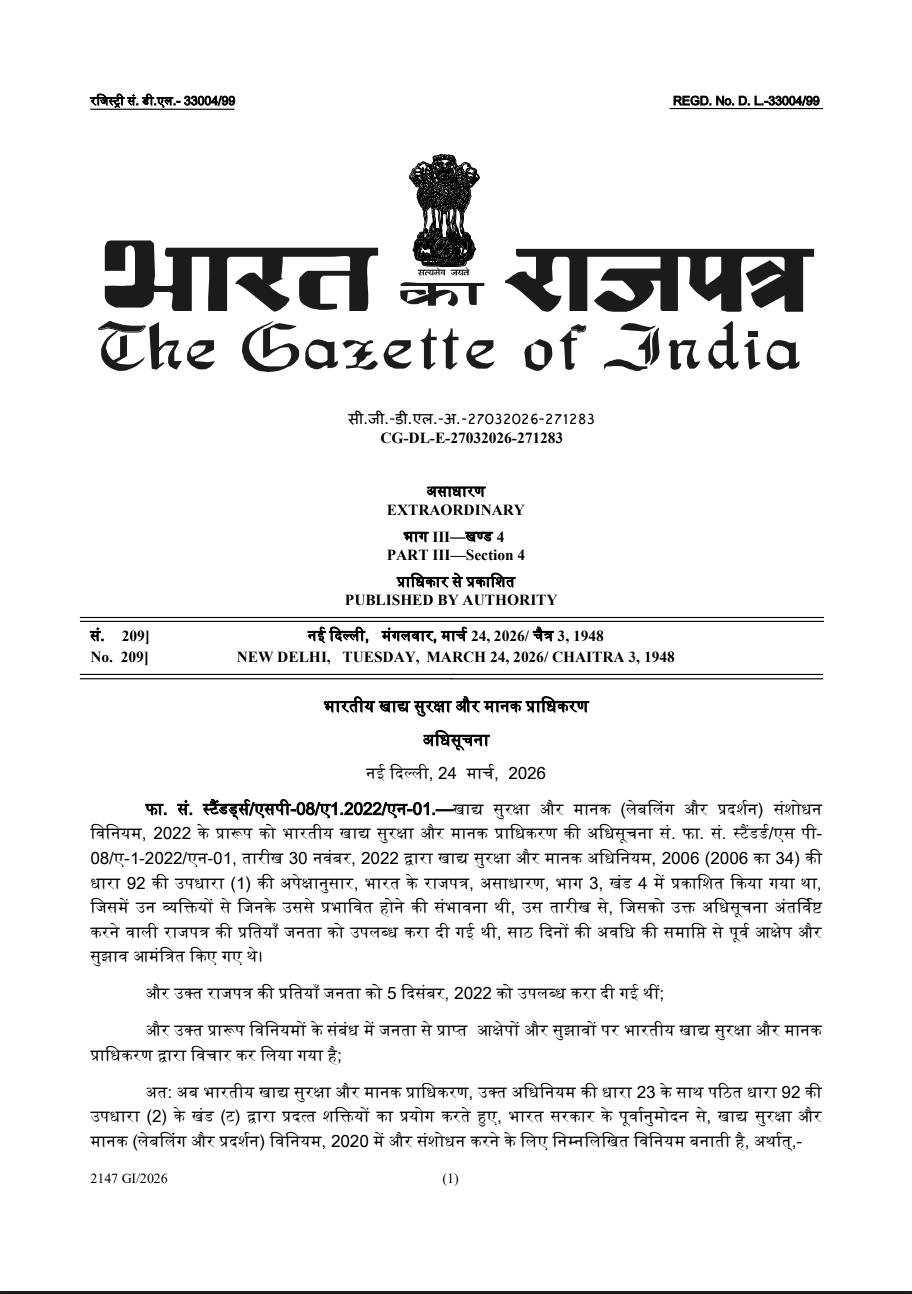
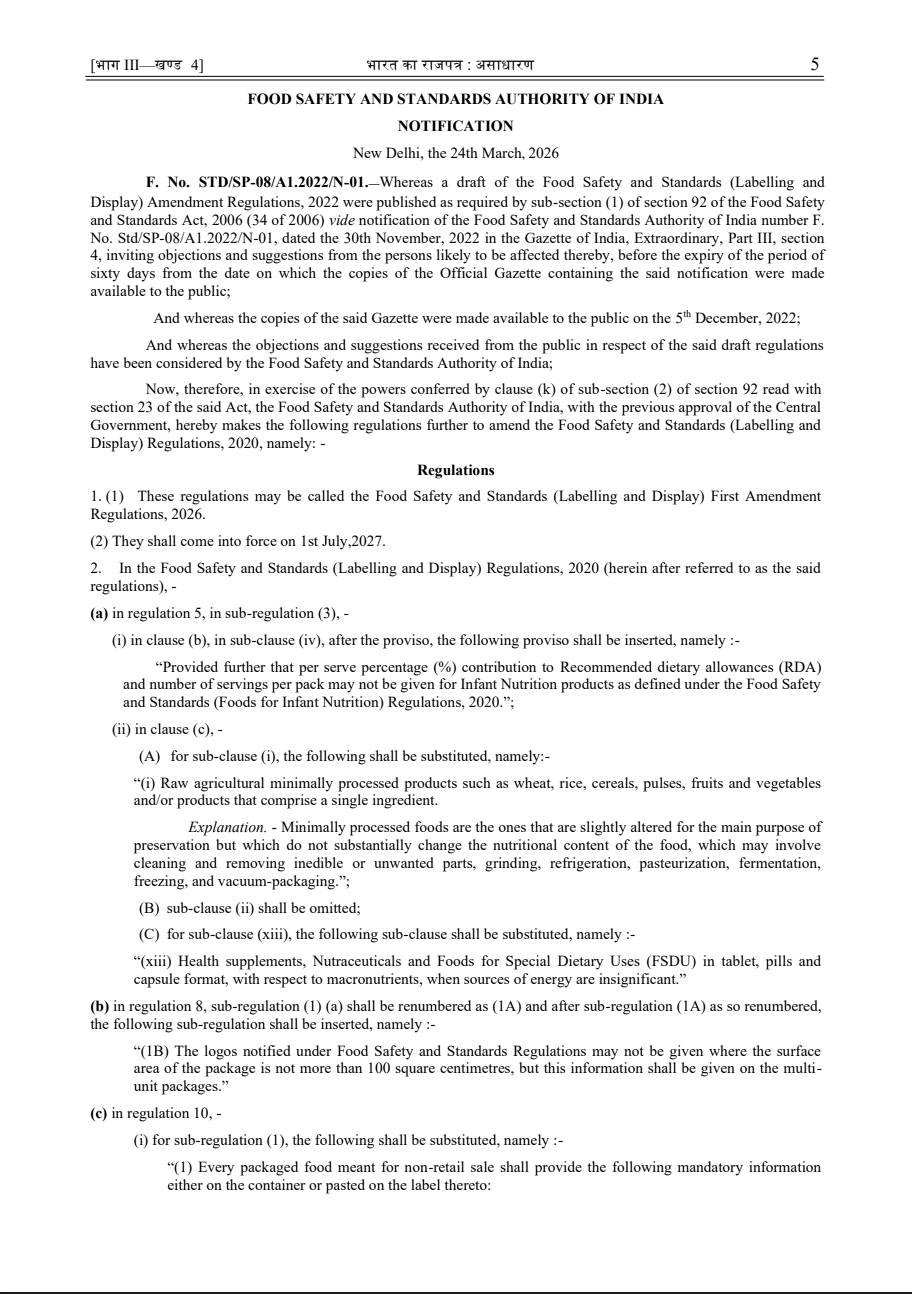
FSSAI notified the Food Safety and Standards (Labelling and Display) First Amendment Regulations, 2026 on 24 March 2026 (F. No. STD/SP-08/A1.2022/N-01, Gazette of India Extraordinary, Part III, Section 4, No. 209). It finalises a draft first published on 30 November 2022. A scanned copy of the order is given below. It amends the Labelling and Display Regulations, 2020, which already govern what goes on every pack of packaged drinking water and mineral water. The amendment comes into force on 1 July 2027, so it is not yet in effect today.
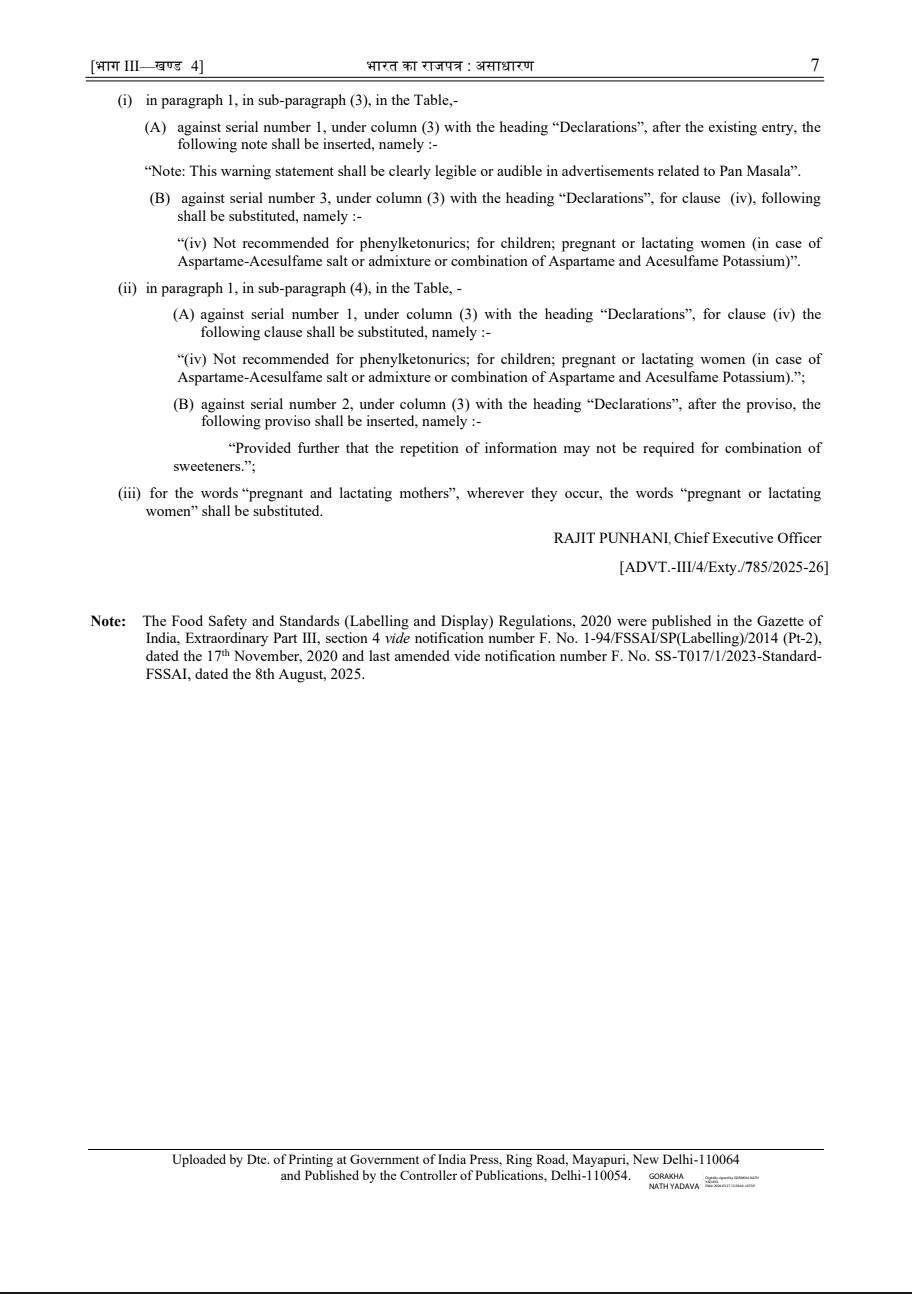
Most of the changes deal with infant nutrition products, fortified foods, minimally processed foods and warning statements for pan masala and certain sweeteners. Three changes are directly relevant to water plants.
Three changes that matter for water plants
| Area | What the gazette says | What a water plant should check |
|---|---|---|
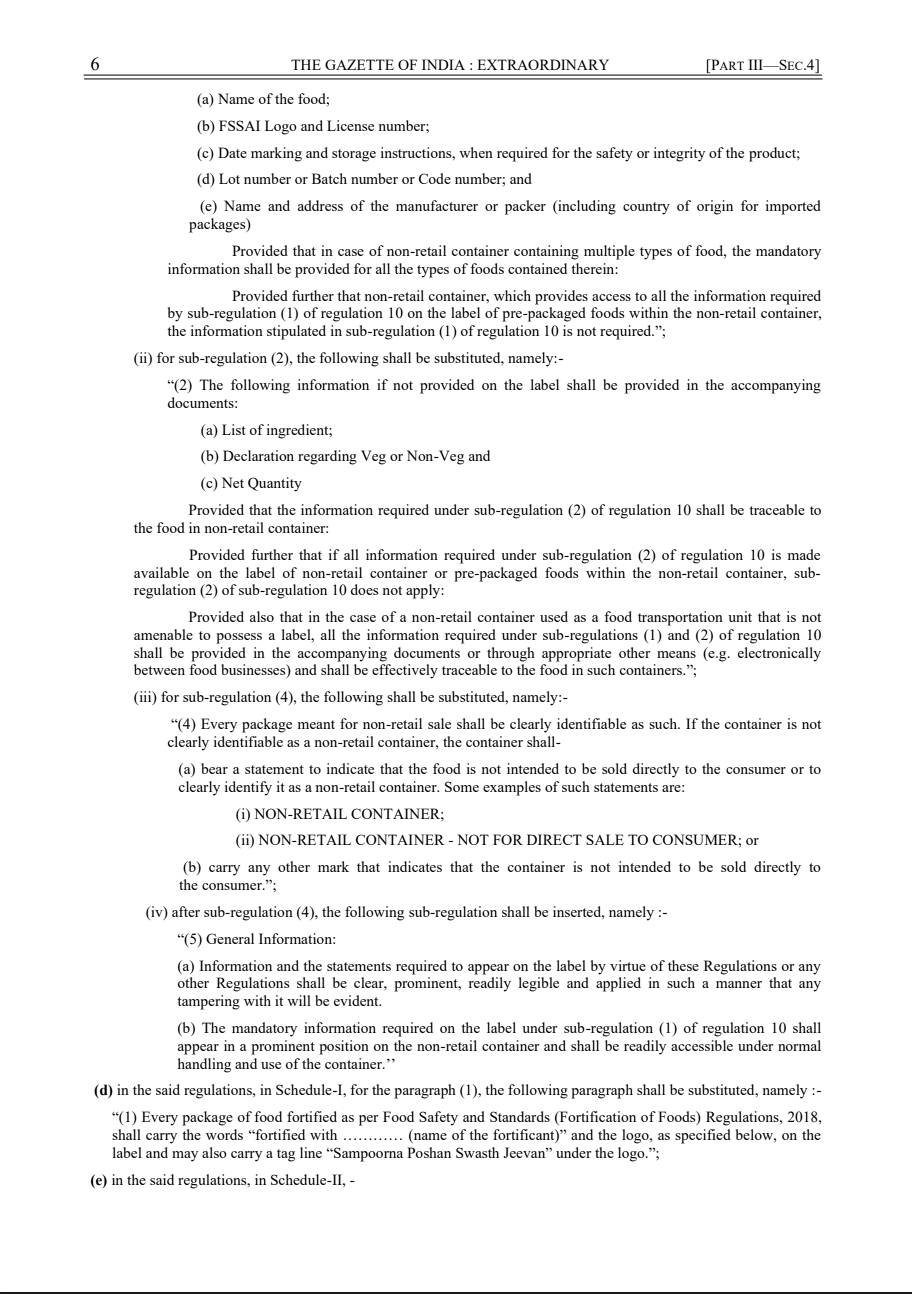
| Non-retail containers | Every pack meant for non-retail sale must carry: (a) name of the food, (b) FSSAI logo and licence number, (c) date marking and storage instructions where needed for safety, (d) lot, batch or code number, and (e) name and address of the manufacturer or packer. Ingredients, veg/non-veg declaration and net quantity may go in accompanying documents. If not obviously non-retail, it must say "NON-RETAIL CONTAINER" or "NON-RETAIL CONTAINER - NOT FOR DIRECT SALE TO CONSUMER" or carry a similar mark. | Any bulk or business-to-business pack you supply that is not meant for sale to consumers |
| Small packs | Logos notified under FSS regulations (such as the FSSAI logo) need not be given on packs with a surface area of not more than 100 cm², but this information must be given on the multi-unit pack (new regulation 8(1B)). | Very small cups or pouches: measure the actual surface area before relying on the exemption |
| How information is shown | Label information must be clear, prominent, readily legible and applied so that any tampering is evident. On non-retail containers it must be in a prominent position, readily accessible in normal handling. | Print quality of batch and date coding on bottles, caps, jars and cartons |
Packs that reach a consumer, such as bottles, cups and 20-litre jars sold to homes, shops and offices, still need the full set of retail label declarations. Our PDW label checklist covers those, including the Legal Metrology declarations.
Read the official order: scanned copy
Below are the English pages (5 to 7) and the cover page of the Gazette of India notification dated 24 March 2026. Pages 2 to 4 carry the same text in Hindi. Tap any page to open it full size.
Download full gazette (7 pages, PDF) · Official copy on fssai.gov.in
Procedure: how to move your labels to the new rules
- List every pack format you make: bottle sizes, cups, pouches, 20-litre jars, and any bulk or B2B packs.
- Mark which packs are non-retail. These need the "not for direct sale" marking and the traceability details listed above.
- Check that your FSSAI licence number on the label matches your current licence and its product scope. See our FSSAI licence service if your licence category changed with the new turnover limits from 1 April 2026.
- Link batch numbers to your test records. Under the FSSAI Scheme of Testing in force since 1 January 2026, plants test every month and keep records for five years. A clear batch code on every pack makes those records traceable. More in our Scheme of Testing guide.
- Plan your packaging stock. Order old-format labels only in quantities you can use up before 1 July 2027, and get new artwork approved well before that date.
The opportunity: cleaner rules for bulk and B2B supply
Many small plants grow by supplying others: packing for a brand owner, or selling in bulk to institutions, caterers and events. The restructured non-retail rule gives a clear list of what such packs must carry. A plant that sets up proper non-retail marking and batch traceability now can show buyers it is ready for the July 2027 rules. That helps in co-packing talks and in tenders, where buyers increasingly ask for compliance documents. If you co-pack, also see our guide on EPR for co-packers.
What this means for water plant owners
- Nothing changes on your labels today; the new rules apply from 1 July 2027.
- Bulk or B2B packs need a clear "not for direct sale to consumer" marking and full traceability details.
- The small-pack logo exemption is limited to packs up to 100 cm² of surface area.
- BIS/ISI marking remains voluntary nationally (since the FSSAI amendment of 17 October 2024), but Uttar Pradesh has made BIS compulsory for PDW units in the state. Your label claims must match your actual certifications; see BIS not mandatory, high-risk category.
- Use the time to align labels, batch coding and test records in one go.
Frequently asked questions
When do the FSSAI labelling amendment 2026 rules apply? From 1 July 2027. They were notified on 24 March 2026.
Do 20-litre jars count as non-retail containers? Jars sold to consumers are retail packs and need full retail labelling. The non-retail rule is for packs not meant for direct sale to consumers. If unsure about a specific pack, ask your food safety officer or a consultant.
How ClearPath Compliance India can help
We review PDW labels and carton artwork against the FSSAI Labelling and Display Regulations and Legal Metrology rules, check that licence numbers and product scope match, and help set up batch coding and record-keeping that fits the Scheme of Testing. We also handle the full licence set for new and running plants: FSSAI, CGWA NOC, CTE/CTO, factory licence and fire NOC. See our water plant licence service.
Sources
- FSSAI: Gazette notification F. No. STD/SP-08/A1.2022/N-01 dated 24 Mar 2026 (official PDF)
- Simpliance: notification record, F. No. STD/SP-08/A1.2022/N-01 (24 Mar 2026)
- ChemLinked: India amends food labelling and display regulations (release 30 Mar 2026)
- NutriLabel: FSSAI latest news, October 2026 (updated 11 Oct 2026)
- Kan and Krishme: FSSAI new labelling rules 2026 (16 Sep 2026)
- FSSAI gazette notifications page
General information only, not legal advice. Rules are described from the gazette notification dated 24 March 2026 and the sources above, as on the dates stated. The scanned pages reproduce a public Government of India notification for reference; the official copy on fssai.gov.in prevails. Brand names, if any, are trademarks of their owners used for identification only. Not sponsored or endorsed by any brand or authority named.